
Cable Crossover Machines
Refine
Sort by
Machine type
Resistance
Weight stack
Max user weight
Total load capacity
Features
Brand
Customer rating
More like this


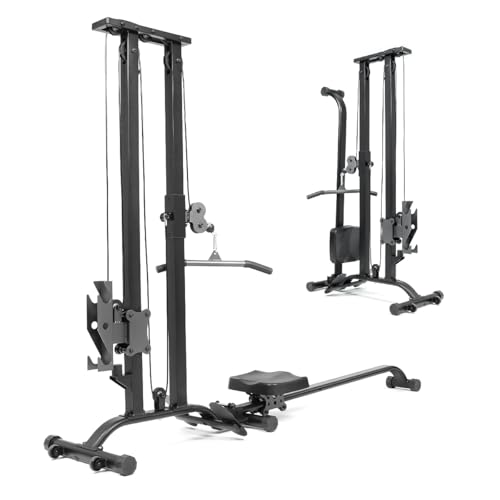
What is a cable crossover machine?
A cable crossover machine is a strength station with two pulley columns, one on each side of you. Each column has a cable that runs over a set of pulleys to its own resistance: a weight stack you select with a pin, or weight plates you load onto a sleeve. Because the two handles move independently, you can work both arms together or one at a time, and because each pulley slides up and down its column you can pull from the floor, from head height or anywhere in between.
That is the big difference from a classic multi gym. A stack gym has fixed press arms and one high and one low pulley; a cable machine like this lets you set the line of pull to suit the exercise. The cable also keeps the load on the muscle through the whole movement, which is why the cable fly is a staple of chest training in every commercial gym.
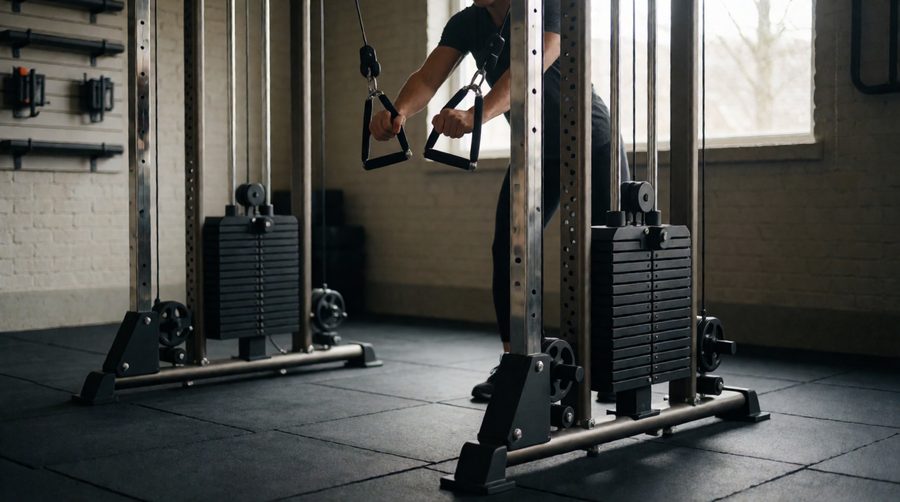
Types of cable machine for a home gym
Four designs cover almost everything sold in the UK. Which suits you comes down to space, walls and whether you already own plates.
Freestanding two-tower machines
The full commercial layout: two tall columns joined by a top frame, often with a pull up bar across the middle. The Body-Solid GDCC-250 is this type, with a 72kg stack in each tower and a 419cm span, so it needs a long wall or a garage.
- Good for: chest flyes and crossovers with the full wide arc, two people training at once
- Watch for: width, total weight (230kg for the GDCC-250) and assembly time

Compact dual stack functional trainers
The same two pulleys and two stacks folded into one narrow frame, so it stands against a wall instead of across the room. The Body-Solid GDCC200 is the example here: 145kg of stack in total on a footprint that needs about 104 x 198cm of floor.
- Good for: spare rooms and outbuildings where a 4m span won't fit
- Watch for: weight (283kg) - the floor has to take it

Plate loaded cable machines
No stack: you slide weight plates onto a sleeve on each carriage. The frame is far lighter to move in and the resistance grows with your plate collection. The Body-Solid Powerline PCCO90X takes up to 60kg of standard 25mm plates per side, and Olympic plates fit with optional adaptor sleeves.

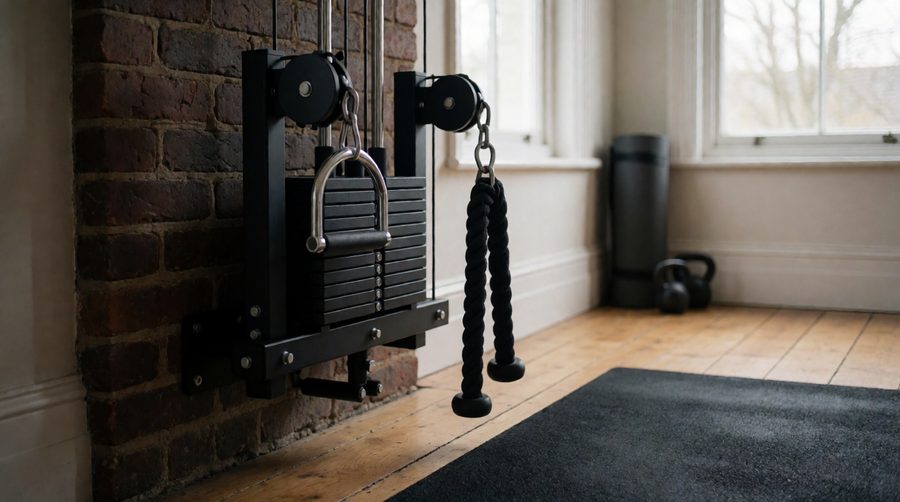
Wall mounted cable stations
A pair of rails bolted to a solid wall, each with a carriage that slides to any height. They stand out from the wall by well under a metre and load your own plates, which makes them the space saver of the group.
- Good for: narrow rooms and anyone who already owns plates
- Watch for: you need a solid masonry wall and the right fixings

If you want a squat rack as well, a power rack with a dual pulley system (like the Garveelife power cages in this range) puts the cable pulleys on the sides of the frame. For a full power rack and guided bar, see all-in-one Smith machines. The fold-flat Tousains CR63 listed here is a single-column lat pulldown and low row unit rather than a true crossover, but it is handy if you mainly want back work in a flat.
Cable crossover machines compared
Real figures from the listings on this site, so you can see what each frame needs and what it gives you.
| Model | Type | Resistance | Pulley positions | Size as listed (cm) |
|---|---|---|---|---|
| Body-Solid GDCC-250 | Freestanding two-tower | 2 x 72kg stacks (95kg option) | 20 | 75 x 419 x 213 H |
| Body-Solid GDCC200 | Dual stack functional trainer | 2 x 72.5kg stacks | 20 | 109 x 185 x 213 H |
| Body-Solid Powerline PCCO90X | Freestanding, plates | Up to 60kg plates per side | Adjustable high and low | 284 L x 99 W x 208 H |
| Strongway wall unit | Wall rail, plates | 250kg capacity, 25/50mm plates | 18 | 63 x 74 x 201 H |
| XS Sports XL | Wall rail, stack | 90kg stack, 2:1 ratio | 17 | 52 W x 53 D x 212 H |
| Garveelife Power Cage | Power rack + dual pulley | Plates, 1:1, 136kg per pulley | 20 | 167.6 x 148.8 x 211 H |
| Tousains CR63 | Fold-flat single column | Plates or dumbbells, 2:1, 150kg | Lat pulldown + low row | 160 x 31.5 x 21.5 folded |
Figures are the manufacturers' specs from the product pages on this site; stock changes, so check the listing for the exact version before you buy.
Weight stack or plate loaded?
A weight stack changes with a pin, so dropping from 30kg flyes to 15kg lateral raises takes a second and supersets flow. Stacks are also quieter and tidier. The catch is weight and cost: the GDCC200 weighs 283kg because 145kg of iron is built in, and you are capped at the stack (72.5kg a side).
A plate loaded frame is lighter to carry in and has no fixed limit apart from its rating, but you change plates by hand and need a set to hand. If you already have plates from a bench or rack, see our weight bench and home gym equipment for what pairs well with one.
Cable ratio: why 90kg can feel like 45kg
The ratio is the most misunderstood spec on a cable machine. On a 1:1 setup the stack moves as far as the handle and you feel the full weight, so 20kg on the pin is 20kg in your hand. Garveelife quotes true 1:1 pulleys on its power cages for this reason.
On a 2:1 pulley system the load is halved and the cable travel doubled. You feel about half the stack, but the handle can travel twice as far, which is what lets a 212cm tall column give you a full-length pull from floor to overhead. The XS Sports XL has a 90kg stack at 2:1, so expect roughly 45kg at the handle. Neither is better; just compare like with like.
How much space do you need?
Floor and width
Measure for the frame plus your movement. For flyes you step about a stride forward from the line between the pulleys, so allow a metre or so of clear floor in front of a wall unit, and room behind you for split stance. Two-tower machines need the most width: the GDCC-250's 419cm span is longer than many single garages are wide.
Ceiling height
Most columns are 201-213cm tall, and a top pull up bar needs headroom above your head when you hang from it. Check for beams, sloping ceilings and roller door tracks before buying.
Weight and floors
A loaded crossover is heavy. Garages and ground floors are easiest; upstairs, place it near a load-bearing wall and get advice on older floors. For lighter frames that still give you pulleys, browse our space saving multi gyms.
Best cable crossover exercises
One cable machine trains almost every muscle group. A balanced week might include:
- Chest - standing cable crossover (high pulleys), low-to-high fly, single-arm cable press
- Back - kneeling lat pulldown, seated row from the low pulley, straight-arm pulldown
- Shoulders - face pulls, cable lateral raises, reverse flyes
- Arms - tricep pushdown with a rope, cable curls, overhead extensions
- Core and legs - woodchops, Pallof press, glute kickbacks, pull-throughs and cable squats
The NHS advises adults to do strengthening activities that work all the major muscle groups on at least 2 days a week, and one cable machine covers all of them. Its strength exercises guide is a good start if you are new to strength training, and the full UK Chief Medical Officers' guidelines explain why muscle strength matters at every age.
For pressing heavy, a bench is worth adding in front of the pulleys - see our bench press multi gyms. For dedicated leg isolation there are leg extension machines.
How to choose a cable crossover machine
- Measure the room - width, depth, ceiling, and where the door is for getting it in.
- Decide stack or plates - stacks for speed and convenience, plates if you already own a set or need to carry it upstairs.
- Check the ratio - 1:1 for full felt weight, 2:1 for longer pulls and finer steps.
- Count the positions - 17-20 height settings is typical; more means finer angles.
- Look at the attachments - handles, ankle strap, rope, lat bar and a pull up bar vary by model; most extra attachments clip onto the cable with a snap hook.
- Plan the build - the GDCC200 listing quotes 4-5 hours for one person and arrives in 3 large and 6 small cartons. Follow HSE manual handling advice and get a second pair of hands for heavy parts.
Want more weight across more stations? Our heavy duty home gyms carry bigger stacks, and the Strongway multi gyms pair well with the wall station above.
Cable crossover machine FAQs
What does a cable crossover machine work?
Chest is the classic use, but with the pulleys set high, low or at mid height it trains back, shoulders, arms, core and legs too.
Is a cable crossover the same as a functional trainer?
Close cousins - both are cable machines. A functional trainer is usually one compact frame with two adjustable pulleys (like the GDCC200); a crossover often means two separate towers with a wider stance for flyes.
Can I do lat pulldowns on one?
Yes, with a lat bar attachment on the high pulley, usually kneeling. Without a thigh pad it is harder to stay down on heavy sets, so heavier pulldowns suit a dedicated station.
Is it good for beginners?
Yes. Cables guide the movement less than a fixed machine but more than free weights, and small weight jumps make it a gentle way into strength training.
Do I need a wall to fit it to?
Only for wall stations, which need solid masonry. Freestanding towers like the Body-Solid models stand on their own feet.