
Leg Extension Machines
Refine
Sort by
Machine type
Resistance
Weight stack
Max user weight
Total load capacity
Features
Brand
Customer rating
More like this
-
 Steelite Adjustable Weight Bench AZ6085VC (Black/White, Folding)
-
 Jelens J10 Leg Extension and Curl Machine (Red, No Additional Weight)
-
 Oppsdecor Adjustable weight bench set
-
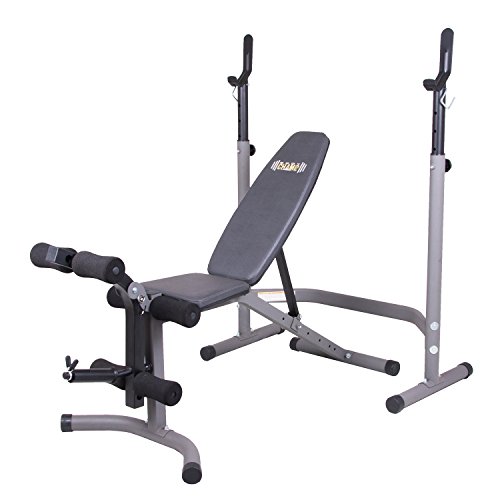 Body Champ Olympic Weight Bench BCB3780 (Grey/Silver)
-
 Lionscool Leg Extension And Curl Machine V4.0 (Black, Carbon Steel)
-
 Goimu Z3 Olympic Weight Bench (120lbs Weights And Bar)
What is a leg extension machine?
This is a seated strength station built for one movement: straightening the knee against a load. You sit with your back against the pad, the seat edge just behind your knees and a foam roller resting on the front of your lower shins. As you straighten your legs the roller lifts, and the resistance - a weight stack, plates on a loading post, or a cable - pushes back.
Because the hips and feet stay still, it is a true isolation exercise, and that is what sets it apart from compound lifts. All of the effort goes through the quadriceps, the four muscles at the front of the thigh (rectus femoris, vastus lateralis, vastus medialis and vastus intermedius). Squats and the leg press share that work with the glutes and hamstrings; this movement does not, which is why bodybuilders use it to finish a workout and physios use it to rebuild a weak quad. The design is usually credited to Jack LaLanne in the 1950s, as Wikipedia explains, and it has been a fixture of commercial gyms ever since.
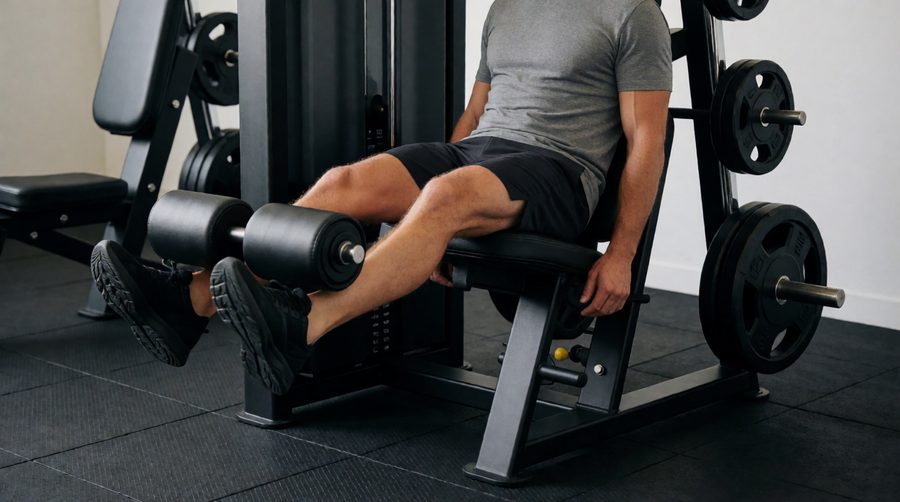
Four ways to add quad extensions to a home gym
The range above covers four kinds of kit. They all train the same muscles, but they differ a lot in space, load and price.
Dedicated leg curl and extension machines
A standalone unit with a seat, back pad and a lever arm with roller pads. Almost every home model combines the two exercises, either by flipping the backrest flat for a lying curl or by rotating the arm for a seated curl. Most are plate loaded with Olympic (50mm) posts, so the load grows with your plate collection.
- Good for: heavy quad work, a smooth arc and the most adjustment
- Watch for: you need your own weight plates, and it takes about a metre square of floor
- Not for: commercial gyms - these are home-rated machines
Multi gyms with a leg developer
Most stack multi gyms have a leg developer at the front of the seat, wired to the same weight stack as the chest press and lat pulldown.
- Good for: one machine for the whole body, no weight plates to buy
- Watch for: the stack is shared, so the load for your quads is capped
The Marcy MWM-4965 (68kg stack, 136kg user limit) and the York Fitness 100kg multi gym are typical. The roller arm is often shorter than on a dedicated machine. Compare them in our Marcy home gyms and 90kg stack gyms.
Weight benches with roller pads
Many adjustable benches have a leg developer bolted to the front: two pairs of foam rollers on a plate-loaded lever. They are the cheapest and smallest option and they fold away, but the seat is flat rather than shaped, so the knee does not always line up with the pivot. They suit lighter work and beginners.
- Good for: small rooms, beginners and anyone who also wants a bench
- Watch for: lighter load limits on the roller arm and less precise knee alignment
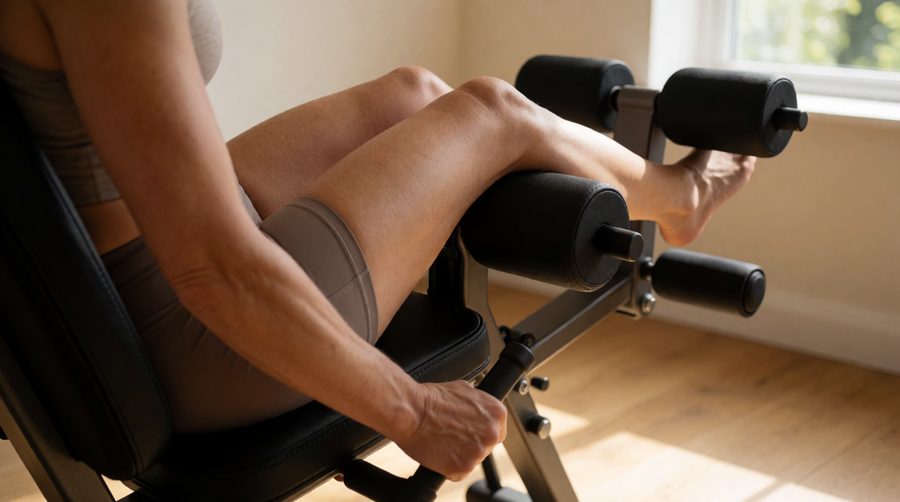
Rack-mounted attachments
If you already own a power rack, a bolt-on or pin-lock attachment adds a quad and hamstring station for very little space. Check the hole size of your uprights (16mm, 18mm, 25mm and 26mm are all common) and the load rating: some attachments are rated at under 80kg, well below a dedicated machine.

Leg extension machines compared
These are the dedicated models in our range, with the figures taken from each listing.
| Model | Exercises | Max user weight | Plates | Size (cm) | Frame weight |
|---|---|---|---|---|---|
| Lionscool V4.0 | Seated extension, lying curl | 180kg (180kg plate load) | 5cm posts | 109 W x 145 D x 102 H | - |
| Jelens J10 | Seated extension, lying curl | 200kg | 50mm posts | 76.5 W x 120 D x 106 H | 27kg |
| GOIMU Z2 | Extension, curl, hip thrust, calf raise | 340kg capacity | 50mm posts | 101 W x 105 D x 98 H | 40kg |
| XS Sports Pro (TRLEX) | Seated extension, seated curl | 135kg (80kg plate load) | 1-inch, Olympic adapter | 106 W x 106 D x 98 H | 45kg |
And the multi gyms in the range that include a leg developer:
| Multi gym | Weight stack | Max user weight | Leg station |
|---|---|---|---|
| York Fitness Multi Gym | 100kg (5kg steps) | 125kg | Leg extension |
| Fit4home Workout Station | 81kg | 120kg | Leg extension and curl |
| Marcy MWM-4965 | 68kg | 136kg | Leg developer with foam rollers |
| Homcom A91-178RD | 66kg | 100kg | Leg extension and curl |
For a bigger stack and sturdier steel, see our heavy duty home gyms.
How to choose one for home
Seated or lying leg curl
Combination machines handle the curl in two ways. A seated curl, as on the XS Sports Pro, keeps you in the same seat and pulls the roller down and back. A lying curl, as on the Lionscool and Jelens, has you lay the back pad flat and curl face down. Both work the back of the thigh; seated is quicker to switch, lying feels more natural to many people. If the curl matters to you, check which one you are getting.

Plate loaded or weight stack
Plate loaded machines are lighter to move into a garage, cost less and take as many weight plates as you can fit on the post. A weight stack changes in seconds with a pin but caps out at the stack, and a stack gym is a far bigger, heavier item. If you already own Olympic plates, a plate loaded frame makes the most sense.
Plate size
Olympic plates have a 50mm hole and standard plates a 25mm (1-inch) hole. Most new machines use the larger posts; the XS Sports Pro takes both with its adapter. Check this before you order so your plates fit.
Adjustment and fit
The single most important setting is the knee lining up with the pivot of the lever arm. Look for a back pad that moves forward and back and a roller you can set just above the ankle. The GOIMU Z2's 47 settings make it the easiest to fit to very tall or short users.

User weight and footprint
Home models are built and warrantied for home use. A commercial machine is heavier, carries a commercial warranty and costs several times as much, so only go that way for a club or studio.
Leave a margin above your own body weight on the user rating. Measure the floor as well as the machine: you need room to lay a combination model flat for curls and to load plates on both sides. A typical home unit fits in about 1.1m x 1.5m with space to move around it. For a whole leg day in one corner, a Smith machine covers squats and lunges too.
How to use a leg extension machine
- Set the back pad so the backs of your knees meet the front edge of the seat and line up with the pivot point.
- Set the roller on the front of your lower shins, just above the ankle. In the starting position your knee should be bent to around 90 degrees - PureGym's exercise guide warns that a tighter angle can irritate the joint.
- Hold the handles at the sides of the seat and keep your hips down.
- Straighten your legs in a smooth, controlled lift, squeeze the quads at the top for a second, then lower slowly and under control back to the starting position.
- Pick a load you can control for every rep with good form. PureGym suggests 3 sets of 8-12 reps, adding weight once you reach the top of that range.
The NHS physical activity guidelines recommend strength work for all the major muscle groups, legs included, on at least 2 days a week, so two leg sessions alongside your upper body work is a sensible starting plan.
Is the leg extension bad for your knees?
Not when it is set up and loaded sensibly with good form. Done as slow, controlled reps through a comfortable range, it is a common part of rehabilitation because it strengthens the quad without load through the hips and spine. Problems tend to come from going too heavy, swinging the weight up or slamming it down, or a seat that puts the joint out of line with the pivot. If you have knee pain or have had surgery, follow your physio's advice on range and load; the NHS knee pain guide covers when to get it checked.
Leg extension machine FAQs
Is a leg extension machine worth it for a home gym?
If quad strength or size is a goal, yes - it is the most direct way to train the front of the thigh, and a combination model covers the curl too. If you only want one piece of kit for the whole body, a multi gym with a leg developer is better value.
Leg extension or leg press?
They do different jobs. The leg press is a compound movement for quads, glutes and hamstrings and lets you move far more load. The extension is an isolation move for the quads alone. Many people do squats or the leg press first and finish with extensions.
What muscles does the leg extension work?
The quadriceps - all four heads. The curl setting on a combination model works the hamstrings.
Do I need weight plates?
For plate loaded machines and bench developers, yes; they are sold without weight plates. Multi gyms with a leg developer use their own weight stack.
Can beginners use one?
Yes. It is one of the easiest strength exercises to learn because the seat holds you in position. Start light, learn the setup and focus on form.
How much space does a home leg extension machine need?
The dedicated models in our range measure roughly 100-120cm deep and 75-110cm wide. Allow extra room to load plates and, on lying curl models, to lay the back pad flat. Our bench press multi gyms combine leg work and pressing in one frame if space is tight.